
IPMAT 2027 Mock Test: How to Attempt and Analyse Them
IPMAT 2027 mock tests turn practice into marks. Learn how to attempt Indore and Rohtak mocks, analyse every score and fix errors before 24 April 2027.
IPMAT 2027 Mock Test: How to Attempt and Analyse Them
An IPMAT 2027 mock test is the closest thing to the real exam you can buy, borrow or download before 24 April 2027. IIM Indore has announced that IPMAT Indore 2027 will be held on Saturday, 24 April 2027, in the afternoon shift, and the paper will be 90 questions in 120 minutes with a strict 40-minute limit on each section. A mock test taken under those same conditions tells you the truth about your preparation in a way no chapter test can: your real speed, your real accuracy, and the exact places where marks leak away. This guide shows you how to attempt IPMAT 2027 mock tests for both Indore and Rohtak, how to analyse each one in 90 minutes, and how to turn the analysis into marks in the next mock.
As of 23 November 2026, the facts are these. IPMAT Indore 2027 is a computer-based test of 90 questions worth 360 marks: Quantitative Ability (Short Answer) has 15 questions with no negative marking, Quantitative Ability (MCQ) has 30 questions, and Verbal Ability has 45 questions, with +4 for a correct answer and -1 for a wrong answer in the MCQ sections. IPMAT Rohtak 2027 has no announced date yet and is expected in May 2027; its paper is 120 multiple-choice questions in 120 minutes with no sectional time limit, 40 questions each in Quantitative Ability, Verbal Ability and Logical Reasoning, with +4 and -1 marking. The pattern figures in this article are checked against Career Launcher, the Free Press Journal report of the IIM Indore announcement, TopRankers and Hitbullseye, and they match the pattern our IPMAT 2027 exam pattern guide sets out in full.
5 Key Takeaways
- IPMAT Indore 2027 is on Saturday, 24 April 2027, afternoon shift: 90 questions in 120 minutes, with a fixed 40 minutes per section. IPMAT Rohtak 2027 is expected in May 2027: 120 questions in 120 minutes with no sectional time limit.
- Attempt every one of the 15 Short Answer questions in the Indore paper. There is no negative marking in that section, so a blank answer is a guaranteed zero and a guess costs nothing.
- A mock test is worth nothing without analysis. Spend at least 90 minutes analysing every full-length mock: check every wrong answer, every skipped question and every question that took too long.
- Take 25 to 30 full-length mocks before the exam, as Shiksha recommends for IIM Indore preparation, starting with one a week in November and moving to two a week from February.
- Keep an error log. The same five or six mistake types cause most lost marks, and a candidate who fixes one type a week gains more than a candidate who takes twice as many mocks without reviewing them.
The IPMAT 2027 Mock Test Pattern in One Page
Before you attempt a single mock, fix the pattern in your mind. The two IPMAT papers are different tests, and a mock that copies the wrong pattern teaches the wrong habits. An Indore mock with no sectional timer is not an Indore mock. A Rohtak mock with a fixed section order is not a Rohtak mock. Check that the mock you are about to take matches the table below, and check the same for any test series you pay for.
| Feature | IPMAT Indore 2027 | IPMAT Rohtak 2027 |
|---|---|---|
| Exam date | 24 April 2027 (Saturday), afternoon shift | May 2027 (expected, not announced) |
| Mode | Computer-based test | Computer-based test |
| Total questions | 90 | 120 |
| Total marks | 360 | 480 |
| Duration | 120 minutes | 120 minutes |
| Sections | QA (Short Answer) 15, QA (MCQ) 30, Verbal Ability 45 | QA 40, Verbal Ability 40, Logical Reasoning 40 |
| Sectional time limit | Yes, 40 minutes per section, fixed order | No, move freely across sections |
| Marking | +4 for correct, -1 for wrong MCQ, no negative marking in Short Answer | +4 for correct, -1 for wrong answer |
| Average time per question | 80 seconds | 60 seconds |
Two numbers in that table decide your whole mock strategy. First, the Indore paper gives you 80 seconds per question on average, but you cannot borrow time from one section to another, so a slow section cannot be rescued by a fast one. Second, the Rohtak paper gives you only 60 seconds per question, but you can spend that time where it earns the most marks, so your section order and your skipping discipline matter more than raw speed. Every piece of advice in this guide follows from those two facts.
When to Start Mocks and How Many to Take
The most common mistake in IPMAT preparation is starting mocks too late. Candidates finish the syllabus in March, take their first full-length mock in early April, discover that their timing is broken, and have three weeks to fix a problem that needed three months. The second most common mistake is the opposite: taking mocks before the basics are in place and treating a low score as a verdict instead of a diagnosis. The right start is simple. Take your first full-length mock as soon as you have finished the basics of one section, even if the other sections are weak. That first mock is a baseline, not a test. Its score does not matter. What matters is that it shows you where you stand, so the next five months of work have a direction.
Shiksha recommends a minimum of 25 to 30 mock tests during IIM Indore IPM preparation, and that number is a good target for Rohtak as well. Thirty mocks across five months is six a month, which is a pace a Class 12 student can hold alongside board exam preparation. The calendar below shows how to spread them. The count includes only full-length mocks. Sectional tests and topic tests are practice, not mocks, and they sit on top of this calendar, not in place of it.
| Phase | Months | Full-length mocks | What the phase is for |
|---|---|---|---|
| Baseline | November 2026 | 2 to 3 | Find your starting score, your weak section and your timing gaps |
| Building | December 2026 to January 2027 | 1 per week | Sectional tests alongside, one full mock a week to track progress |
| Board exam break | February 2027 | 1 per week | Keep the habit alive with one mock a week while boards take priority |
| Intensive | March 2027 | 2 per week | Full mocks with full analysis, attempt order and safe attempt number fixed |
| Final | April 2027 | 2 per week until 24 April | Exam-day rehearsal, revision of the error log, no new topics |
Notice what the calendar does not do. It does not ask for a mock every day. A mock every day in the final month sounds serious and feels productive, but it leaves no time for analysis, and a mock without analysis is just an expensive way to practise the same mistakes. Two mocks a week with full analysis beats five mocks a week with none, every time. Our guide to analysing mock tests explains the same principle for CLAT, IPMAT and CUET together, and the method below applies it specifically to IPMAT.
How to Attempt an IPMAT Indore Mock
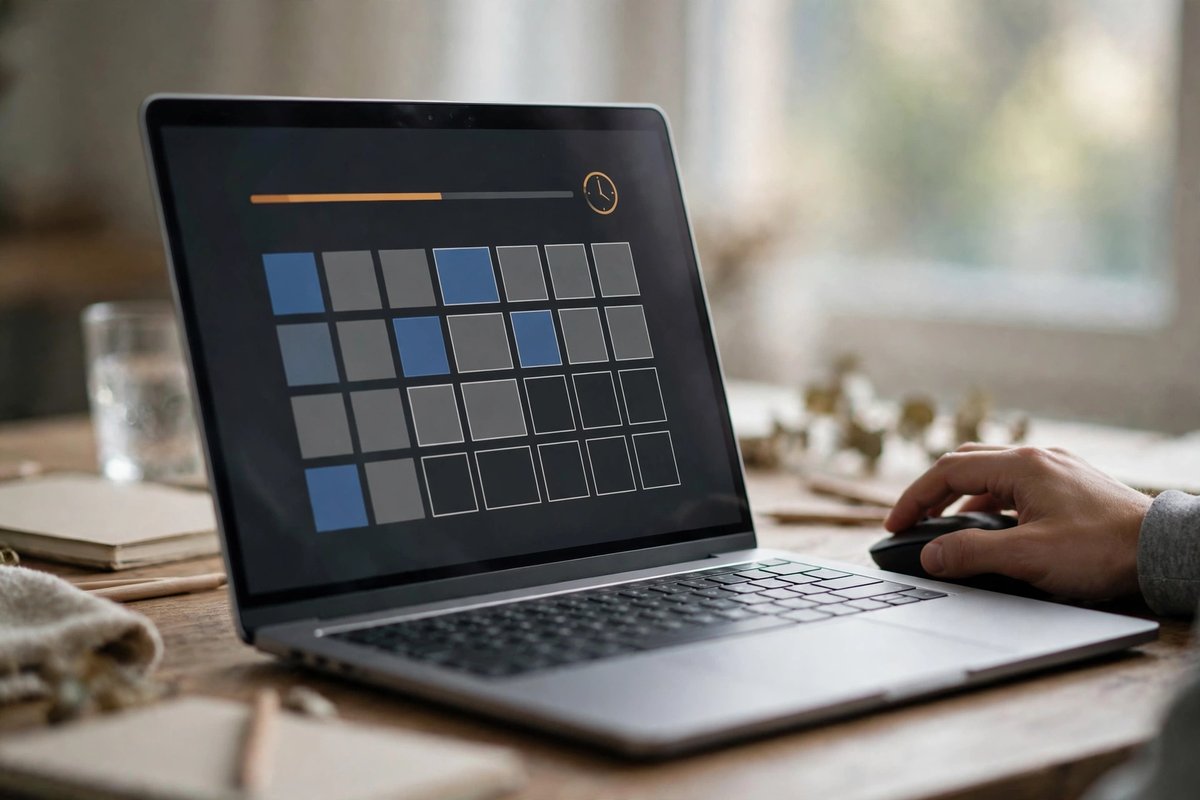
The Indore paper is three separate 40-minute exams joined together. You cannot carry time forward, you cannot go back, and each section is submitted automatically when its clock ends. That makes the attempt strategy different from every other entrance exam you will take. Practise the strategy below in every mock, so that on 24 April it feels like a habit and not a decision.
Before the mock starts
Take the mock at the same time of day as the real exam, in the afternoon, in a quiet room, with your phone in another room. Sit at a desk, not on a bed. Keep a rough sheet and a pen beside you, because the real exam gives you rough sheets, and the Short Answer section needs working space. Tell your family the mock is an exam and ask not to be disturbed for two hours. If you take mocks in easy conditions, you are practising a different exam from the one you will sit.
The Short Answer section: attempt all 15
The Quantitative Ability (Short Answer) section is the easiest marks in the whole IPMAT paper, and candidates lose them by leaving questions blank. There is no negative marking here. A wrong answer costs zero. A blank answer also costs zero, but a guess that happens to be right earns four marks. So the rule is simple: attempt all 15 questions, even if you are only guessing on three or four of them. Type a number for every question. If you have no idea, type your best estimate. If you have a rough idea of the range, type the middle of it.
Do not spend the whole 40 minutes on the Short Answer section trying to perfect every answer. The section is 15 questions in 40 minutes, which is more than two and a half minutes per question, but the questions are meant to be solved quickly. Work through them once, mark the ones you are unsure about, and if time is left, come back to them. A common error is spending 10 minutes on one hard Short Answer question and then rushing the last five. One question is worth four marks. Five rushed questions are worth twenty.
The MCQ Quant section: accuracy first, then speed
Quantitative Ability (MCQ) is 30 questions in 40 minutes, with -1 for a wrong answer. That is 80 seconds a question, and the section rewards a calm, steady pace. Start with the topics you are strongest in. Arithmetic questions, percentages, profit and loss, time and distance, are usually quicker than geometry and algebra, so clear those first and then move to the harder ones. If a question does not open up in 90 seconds, mark it and move on. You can come back to it if time is left, and the marks you save by not getting stuck are worth more than the marks on that one question.
Use the process of elimination before you guess. In a four-option question, if you can rule out two options with confidence, the guess is now a 50-50 shot: on average, it earns you two marks per attempt across many such questions, since a correct answer gives four and a wrong one takes one. If you cannot rule out even one option, skip the question. Blind guessing across many questions loses marks, and the cut-off article in our series, IPMAT 2027 cut off, shows how small the margin is: a handful of marks can decide a call.
The Verbal Ability section: 45 questions, half the paper
Verbal Ability is 45 of the 90 questions and 180 of the 360 marks. It is half the paper, and it is the section most candidates under-prepare for. In the mock, read the passage questions first if reading is your strength, or the vocabulary and grammar questions first if it is not. The point is to have a fixed order that you have practised, so you never spend the first five minutes of the section deciding what to do. Reading comprehension passages need calm, unhurried reading. If you rush a passage to save time, you will answer its five questions wrong, and you will have saved nothing.
Watch the clock in blocks of ten questions. At the end of 10 questions you should have used about 9 minutes. At 20 questions, about 18 minutes. If you are behind, skip the longest passage and come back to it. If you are ahead, slow down and check the questions you marked. Our IPMAT Verbal Ability guide covers the section in detail, and the reading habit it recommends, 30 minutes of serious reading a day, is the single best preparation for this section.
How to Attempt an IPMAT Rohtak Mock
Rohtak is a different game. There is no sectional timer, so you can spend your 120 minutes however you like across the 120 questions. That freedom is the whole strategy, and it is also the whole danger. Candidates who love Quant spend 70 minutes on it and then rush through Verbal and Logical Reasoning in 50 minutes, and their score shows it. Candidates who fear Quant skip it, spend too long on the easy sections, and leave 15 Quant questions unattempted. The fix is a written plan, fixed in advance, that you follow in every mock.
A good first plan is 40 minutes for Quantitative Ability, 35 minutes for Verbal Ability and 35 minutes for Logical Reasoning, with 10 minutes kept in reserve for the questions you marked. That adds up to 120 minutes. The split is not sacred. If Logical Reasoning is your strength, give it 40 minutes and take 5 from Verbal. The point is that the split is decided before the mock, written on your rough sheet, and followed during it. After five or six mocks, your own data will tell you the right split, and you can change it. Until then, follow the plan you wrote.
Attempt order matters in Rohtak because there is no fixed order. Most candidates do best starting with their strongest section, because early marks build confidence and calm, and ending with their weakest, when the pressure is lower and the easy questions in it are already identified. Practise two orders in your mocks and compare the scores. If starting with Verbal gives you a higher score than starting with Quant, that is your order. Do not copy a topper's order. Your order is the one your own mock scores support.
Skipping is a skill in Rohtak, not a failure. With 120 questions in 120 minutes, you have 60 seconds per question, and some questions will take three minutes. If you attempt every question in order, the hard ones will eat the time of the easy ones. The rule that works for most candidates is two rounds. Round one: attempt every question you can solve in under a minute, and mark the rest. Round two: go back to the marked questions with the time that is left. In round one you bank the easy marks. In round two you spend your remaining time on the questions that are actually worth it.
How to Analyse a Mock in 90 Minutes
Analysis is where mocks turn into marks, and it is the part most candidates skip. The analysis below takes 90 minutes, which is less time than the mock itself, and it is the most valuable 90 minutes in your preparation. Do it on the same day as the mock, while the questions are still fresh in your mind. Do it with the solutions open, a notebook beside you, and your phone in another room.
Step 1: Record the raw numbers (10 minutes)
Write down your total score, your score in each section, the number of questions attempted, the number correct, the number wrong and the number skipped. Then write down the time you spent on each section, if your mock platform shows it. These numbers are your baseline. Without them, the rest of the analysis is guesswork. Keep them in one notebook or spreadsheet, one row per mock, so you can see the trend across the season. A score that moves from 120 to 160 to 200 across ten mocks tells you the preparation is working. A score that stays flat at 150 tells you something needs to change, and the next steps will show you what.
Step 2: Sort every question into four boxes (30 minutes)
Go through the paper question by question and sort each one into one of four boxes: correct and quick, correct but slow, wrong, and skipped. The second box is the one candidates ignore, and it is often the most important. A question you got right but that took three minutes is a question that cost you two other questions. Mark it as a problem, not a success. The wrong box is the one that tells you what to study. The skipped box tells you what you are afraid of, and fear is usually a sign that the topic needs work, not that it is beyond you.
| Box | What it means | What to do about it |
|---|---|---|
| Correct and quick | Strength, keep it warm | Revise lightly, do not over-practise |
| Correct but slow | Knowledge is there, speed is not | Timed drills on that topic, 20 questions in 20 minutes |
| Wrong | Concept gap or careless error | Relearn the concept or fix the habit, see Step 3 |
| Skipped | Topic fear or time pressure | Study the topic from basics, or fix the time plan |
Step 3: Split the wrong answers into concept errors and careless errors (20 minutes)
Every wrong answer is one of two things. A concept error means you did not know how to solve the question. A careless error means you knew how to solve it and still got it wrong: you misread the question, you copied the wrong number, you marked the wrong option, you forgot the negative sign. Be honest about the split, because the fix is different. Concept errors are fixed by studying. Careless errors are fixed by habits: reading the question twice, underlining the key numbers, checking the option you marked before moving on. Most candidates find that a third or more of their wrong answers are careless errors, and those are the cheapest marks in the whole exam. Fixing them needs no new study, only attention.
Step 4: Update the error log (15 minutes)
Write every concept error and every repeated careless error into your error log, with the topic, the question type and the correct method. The error log is described in the next section. This step is the whole point of the analysis. If you do not write it down, you will make the same mistake in the next mock, and the mock will have taught you nothing.
Step 5: Set three targets for the next mock (10 minutes)
Finish the analysis by writing three targets for the next mock. Not ten targets, three. Examples: attempt all 15 Short Answer questions, keep careless errors under five, finish the Verbal section with five minutes to spare. Three targets are few enough to remember during the mock and specific enough to measure after it. If you hit all three, set three new ones. If you miss one, it stays on the list. This is how a mock score climbs week by week instead of jumping around.
Step 6: Re-solve the questions you got wrong (5 minutes of planning, then practice)
Pick the five wrong questions that matter most, the ones from topics that appear every year, and re-solve them from scratch without looking at the solution. If you can solve them cold, the concept is fixed. If you cannot, that topic goes into your study plan for the week. Do not try to re-solve every wrong question. Five is enough, and five done properly beats twenty skimmed.
The Error Log: Turning Mistakes into Marks
An error log is a notebook, a spreadsheet or a set of cards, with one entry per mistake: the date, the mock number, the topic, the question, what you did wrong, and the correct method in one line. That is all. It is not a diary and it is not a second textbook. Its only job is to make sure you never pay twice for the same mistake.

Review the error log for 15 minutes before every mock. Read the last ten entries. If the same mistake type appears three times, that type becomes your study priority for the week. Common types include sign errors in algebra, misreading "not" and "except" in Verbal questions, rushing the last five questions of a section, and guessing in MCQ Quant without eliminating any option. Every candidate has their own list, and your list is the most useful study material you own, because it is written about your mistakes and nobody else's.
The error log also protects you in the final month. In April, when there is no time to study new topics, the error log is your revision. Reading 100 entries about your own mistakes is worth more than reading a new chapter, because the exam will test the same topics and you will face the same traps. Candidates who keep a log from November arrive in April with a complete map of their weaknesses. Candidates who do not keep one arrive with a vague feeling that they are weak in Quant, and no idea which part of it.
Section-Wise Mock Fixes
Quantitative Ability: speed comes from arithmetic, not tricks
If your Quant score is low in mocks, the cause is almost always slow arithmetic, not a lack of advanced knowledge. The IPMAT Quant syllabus is built on Class 11 and 12 mathematics, and the questions that decide the section are the medium ones, not the hardest ones. Our IPMAT Quantitative Aptitude guide lists the topics in order, and the order matters: number systems, percentages, profit and loss, ratio and proportion, averages, time speed and distance, then algebra and geometry. If your mock analysis shows that you are slow on the arithmetic topics, practise them in timed drills of 20 questions in 20 minutes until the methods are automatic. Speed in Quant is not a talent. It is the result of having solved the same type of question fifty times.
Verbal Ability: reading is the preparation
If your Verbal score is low, the fix is reading, not more grammar rules. Thirty minutes of serious reading a day, every day, from November to April, changes your reading speed and your accuracy more than any shortcut. Read editorials, long-form articles and opinion pieces, and after each one, write two lines: what the author is saying and whether you agree. That habit trains exactly what the Verbal section tests: understanding an argument quickly and answering questions about it accurately. In the mock, the same habit shows up as faster passages and fewer re-reads. The vocabulary questions in the section reward the same habit, because words learned from reading stick better than words learned from lists.
Logical Reasoning (Rohtak): patterns, not puzzles
Rohtak candidates get a Logical Reasoning section that Indore candidates do not, and it is 40 of the 120 questions, a third of the paper. The section is about patterns: series, coding, blood relations, seating arrangements, syllogisms and data-based reasoning. The method that works is the same as for the other sections: learn one type at a time, practise it until it is fast, then move on. In mocks, do the question types you are good at first and leave the long seating arrangement sets for the second round, because a five-question set that takes eight minutes is a bad deal when there are five one-minute questions waiting elsewhere. Our IPMAT Logical Reasoning guide covers the section type by type.
A 5-Month Mock Calendar: November to April
Here is the calendar in concrete form, so you can copy it into your own plan. It assumes the Indore exam on 24 April 2027 and a Rohtak exam in May 2027. It also assumes board exams in February and March, which is when most Class 12 candidates have the least time. If your boards are in a different month, shift the light phase to match them.

In November, take two or three full-length mocks and analyse them fully. This is the baseline month. Your score will probably be lower than you hoped. That is normal and it does not matter. What matters is that you now know your weak section, your safe attempt number and your careless error count, and you can plan December around them.
In December and January, take one full mock a week and add sectional tests for your weak section. If Quant is weak, take two Quant sectional tests a week. If Verbal is weak, read more and take one Verbal sectional a week. The full mock each week is a checkpoint. If the score is rising, the plan is working. If it is flat for three weeks, change something: the attempt order, the time split, or the topic you are studying.
In February, boards take priority, and the mock habit shrinks to one full mock a week. Do not stop completely. A candidate who stops mocks for a month in February returns in March with rusty timing and has to rebuild it. One mock a week keeps the habit alive at a cost of four hours, including analysis, and that is affordable even in board season.
In March, move to two full mocks a week with full analysis, and fix your attempt order and your safe attempt number by the end of the month. By the last week of March you should know exactly how you will attempt the paper: which section first, how many questions you will attempt, and what your targets are. April is rehearsal, not learning. Take two mocks a week, revise the error log, and stop studying new topics after the first week of April. The last mock should be three or four days before the exam, not the day before, so that you arrive fresh.
7 Mistakes That Waste Mock Tests
1. Taking a mock without a timer. A mock without exam conditions is a practice set, not a mock. If you pause it, look up answers or take it in pieces, the score means nothing and the timing lessons are lost.
2. Skipping the analysis. The mock takes two hours. The analysis takes 90 minutes. Candidates who skip the analysis are paying for a diagnosis and throwing away the prescription.
3. Taking too many mocks. Five mocks a week with no analysis is worse than two with full analysis. Volume without review repeats the same mistakes at a higher speed.
4. Leaving Short Answer questions blank. In the Indore paper, a blank Short Answer question is a free mark thrown away. There is no penalty. Attempt all 15, every time.
5. Changing the attempt order every mock. If you change your order every week, you never learn whether any order works. Pick an order, use it for five mocks, then judge it by the scores.
6. Studying only your strong section. Mocks feel good when the score rises, and the easiest way to raise it is to practise what you are already good at. The marks are in the weak section, and the error log will tell you which part of it.
7. Taking a mock the day before the exam. A bad score the day before the exam destroys confidence, and a good score teaches nothing. The last mock belongs three or four days before the exam, and the day before belongs to the error log and rest.
Free IPMAT Mock Tests Worth Using
You do not need to pay for mocks to start. Career Launcher offers free full-length and sectional IPMAT mock tests for both Indore and Rohtak, based on the actual pattern, with step-by-step solutions. Shiksha offers free IPMAT mock tests with solutions and previous year papers with answer keys. Both are good places to take your first few mocks, and both follow the real pattern closely enough that the timing lessons transfer to the exam. Start with the free mocks, learn your baseline, and only pay for a test series when you know what you need from it: more full-length mocks, better analysis, or an All-India rank to compare against. A paid series that you never analyse is worth less than a free mock that you do.
When you compare test series, check three things. First, does it copy the real pattern, including the 40-minute sectional timers for Indore and the absence of them for Rohtak. Second, does it give you section-wise time analysis, so you can see where your minutes went. Third, does it give you detailed solutions for every question, including the ones you got right, so you can check whether your method was the fast one. If a series fails any of these three, it will teach you the wrong habits, and no number of mocks in it will fix that.
Frequently Asked Questions
How many IPMAT mock tests should I take before the exam?
Take at least 25 to 30 full-length mocks before the exam, as Shiksha recommends for IIM Indore preparation. Start with one a week in November and December, keep one a week through the board exams in February, and move to two a week in March and April. Add sectional tests for your weak section on top of that, but do not count them in the 25 to 30.
When should I start taking IPMAT mock tests?
Take your first full-length mock as soon as you have finished the basics of one section. For most candidates that is November. The first mock is a baseline, not a test, and its score does not matter. Waiting until the syllabus is finished, usually March, leaves too little time to fix timing and attempt strategy.
Should I attempt all 15 Short Answer questions in IPMAT Indore?
Yes. There is no negative marking in the Short Answer section, so a wrong answer costs nothing and a right answer earns four marks. Attempt all 15 in every mock and in the real exam, even if you are guessing on a few of them. A blank answer is a guaranteed zero.
What is a good score in an IPMAT mock test?
A good score depends on the mock's difficulty, so compare your score to the cut-off, not to an absolute number. Our IPMAT 2027 cut off guide explains the expected cut-offs for Indore and Rohtak. What matters more than any single score is the trend: a score that rises steadily across ten mocks is a sign the preparation is working, whatever the starting number was.
How do I analyse an IPMAT mock test properly?
Spend 90 minutes on the same day as the mock. Record your section scores and attempts, sort every question into correct and quick, correct but slow, wrong and skipped, split the wrong answers into concept errors and careless errors, update your error log, and set three targets for the next mock. The full method is in the analysis section of this guide.
Are free IPMAT mock tests enough for preparation?
Free mocks from Career Launcher and Shiksha are enough to start, to learn your baseline and to practise the pattern. A paid test series becomes useful when you want more full-length mocks, an All-India rank for comparison, or deeper analysis. What matters is not whether the mock is free or paid, but whether you analyse it fully after taking it.
Conclusion: Mocks Are Rehearsals, Not Exams
A mock test is a rehearsal. Its job is to let you fail safely, in private, months before the real exam, so that the failures happen there and not on 24 April 2027. Every mock that you analyse properly makes the next one easier: the attempt order gets fixed, the careless errors get fewer, the weak section gets stronger, and the score climbs. That is the whole secret of mock tests. There is no shortcut in them, and there does not need to be one. Twenty-five to thirty mocks, each one analysed for 90 minutes, each one feeding an error log, each one setting three targets for the next, is enough to take a candidate from a nervous first attempt in November to a calm, practised performance in April.
If you want that preparation with a teacher who watches the numbers with you, Skylor Institute in Bathinda runs small-batch IPMAT coaching with a maximum of 40 students per cohort and one mentor for every ten students, so your mock analysis is reviewed by a person, not just a dashboard. Our IPMAT 2027 preparation strategy guide sets out the full plan that this mock guide fits into, and our IPMAT 2027 syllabus guide lists every topic the mocks will test. Start with one mock this week. Analyse it properly. Then take the next one.
Need Personalized Diagnostic Guidance?
Speak directly with Skylor's academic directors in Bathinda. Discuss batch schedules, test analytics, and personalized preparation strategies.