IPMAT 2027 Logical Reasoning Preparation Guide
IPMAT 2027 Logical Reasoning preparation guide: Rohtak's 40-question, 160-mark section explained, with question methods, a 12-week plan and exam-day strategy.
Logical Reasoning is the section that separates IPMAT Rohtak aspirants from IPMAT Indore aspirants — and it is the section that Rohtak aspirants most often leave to chance. IPMAT Indore has no Logical Reasoning section at all. IPMAT Rohtak has a full one: 40 questions, 160 marks, one-third of the entire paper. If you are aiming for IIM Rohtak and you are only preparing Quant and Verbal Ability, you are preparing for two-thirds of your exam. This IPMAT 2027 Logical Reasoning preparation guide explains exactly what the section contains, gives you a working method for each question family, and lays out a 12-week plan that turns Logical Reasoning from a guessing game into a reliable source of marks.
Who is this guide for? Class 11 and 12 students preparing for IPMAT 2027 at IIM Rohtak, and students preparing for both Indore and Rohtak who need to add Logical Reasoning to a plan built around Indore. You do not need to be naturally good at puzzles to score well here. Logical Reasoning is a skill, not a talent: it rewards a small set of diagrams, a fixed order of attack, and enough timed practice that the diagrams become automatic.
Key Takeaways
- Logical Reasoning appears only in the IPMAT Rohtak paper, not in IPMAT Indore — 40 questions, 160 marks, one-third of the Rohtak paper.
- IIM Rohtak does not publish a fixed topic-wise syllabus, so prepare by question family: seating arrangement, blood relations, syllogisms, series, coding, and data-based puzzles.
- Draw before you solve: almost every Logical Reasoning question becomes easy once its information is on paper as a diagram, table, or chain.
- With +4 for a correct answer and −1 for a wrong answer, a blind guess is worse than a skip — guess only after eliminating at least two options.
- Budget about 40 minutes for Logical Reasoning inside Rohtak's shared 120-minute paper, and practise it under that budget, not untimed.
IPMAT 2027 Logical Reasoning: The Pattern You Are Preparing For
As of November 2026, the official IPMAT 2027 notification from IIM Rohtak has not yet been released; registration is expected to begin in early 2027, and the 2026 test was held on 10 May 2026. The pattern below follows the most recent exam cycle, which IIM Rohtak has kept stable in recent years. If the 2027 notification changes anything, read the tables in this guide against that notification.
| Feature | IPMAT Rohtak | IPMAT Indore (for comparison) |
|---|---|---|
| Logical Reasoning questions | 40 MCQs | None — no Logical Reasoning section |
| Marks from Logical Reasoning | 160 out of 480 | 0 |
| Total paper | 120 MCQs in 120 minutes | 90 questions in 120 minutes |
| Other sections | Quantitative Ability (40) and Verbal Ability (40) | Quant MCQ (30), Quant Short Answer (15), Verbal Ability (45) |
| Marking | +4 for a correct answer, −1 for a wrong answer, 0 for unattempted | +4 / −1 for MCQs; no negative marking for Short Answer |
The Rohtak paper is a single 120-minute paper, and you manage your own time across its three sections. That freedom is the section's biggest trap. Students who love Quant spend 55 minutes on it, then arrive at Logical Reasoning tired and rushed, and score far below what they scored in untimed practice. Decide your Logical Reasoning budget before the exam — about 40 minutes is a sound starting point — and treat it as a hard limit in every mock you take from now on.
One more Rohtak detail worth knowing: candidates who also choose the Integrated Programme in Law (IPL) when registering answer an extra Legal Reasoning section of 20 questions in 20 minutes, with the same +4 / −1 marking. IPM-only candidates do not take it. This guide is about the 40-question Logical Reasoning section that every Rohtak IPM candidate faces.
What the Logical Reasoning Section Actually Tests
IIM Rohtak names only the three sections and does not publish a topic list, so the families below are drawn from previous Rohtak papers and standard preparation material. Treat them as a priority order, not a promised breakup — the institute can vary the mix from year to year, but these families have appeared consistently.
| Question family | What it looks like | Why it matters |
|---|---|---|
| Seating arrangement | People seated in a row, around a table, or in a sequence, with clues about who sits where | The largest puzzle family; one solved arrangement answers 4–5 questions |
| Blood relations | Family relationships described in words or symbols, sometimes combined with seating | Fast marks once you draw a family tree instead of holding relations in your head |
| Syllogisms | Two or three statements followed by conclusions to test as definitely true or false | Pure method: Venn diagrams remove all guesswork |
| Series and analogies | Number series, letter series, odd one out, and analogy pairs | Quick questions if you know the standard patterns; time sinks if you do not |
| Coding and decoding | Words or numbers coded by a rule you must discover and apply | Pattern recognition under time pressure |
| Data-based puzzles | Comparisons, rankings, directions, ages, and logical puzzles with several conditions | Tests whether you can organise messy information without losing a condition |
Notice what is missing from this list: there is no heavy mathematics here, and no general knowledge. Logical Reasoning tests whether you can take a set of statements, organise them, and draw only the conclusions they actually support. That is why it responds so well to method. A student who learns six diagrams beats a student who is merely clever, because the clever student re-invents the diagram on every question while the trained student draws it in seconds.
The One Rule Behind Every Family: Draw Before You Solve

Almost every Logical Reasoning mistake has the same cause: the student tried to hold the information in their head. Working memory holds about four items at a time; a seating puzzle gives you eight. The moment you write the information down in the right shape, the question stops being a memory test and becomes a reading test. These are the shapes to learn.
- Seating arrangement: draw the row or circle first, mark the fixed positions, then place people one clue at a time. Never place a person on a guess — leave the slot blank and move to the next clue.
- Blood relations: draw a family tree with standard symbols — a square for male, a circle for female, a horizontal line for a couple, a vertical line for parent to child. Read the question backwards from the person asked about.
- Syllogisms: draw overlapping circles for each statement. A conclusion is correct only if it is true in every possible drawing, not merely in the drawing you happened to make first.
- Rankings and comparisons: make a simple table or a vertical chain. Write every comparison as a symbol (A > B, C = D) before you try to combine them.
- Directions: draw a compass and trace the path step by step. Most direction errors come from turning left and right in your head instead of on paper.
Practise drawing these shapes until they are boring. A diagram you have to think about is not yet a tool; a diagram your hand draws on its own is. In timed practice, your first 15 seconds on any puzzle question should be spent drawing, not answering.
Seating Arrangement: The Method, Step by Step
Seating arrangement is the highest-value family in the section because one arrangement usually carries four or five questions. Solving the arrangement once gives you all of them; failing it costs all of them. That is why arrangement questions deserve a fixed method rather than improvisation.
Step 1: Read all the clues before placing anyone
Read the full set of clues once and mark which ones are definite ("A sits third to the left of B") and which are conditional ("A sits next to either B or C"). Definite clues go on the diagram first. Conditional clues wait — they are the ones that create branches, and branches are where students go wrong.
Step 2: Start from the most connected person
Begin with the person named in the most clues, not the first person named in the question. Placing the most connected person first gives every other clue something to attach to, and it usually collapses the puzzle in two or three moves.
Step 3: Use elimination, not guessing
When a clue says a person is not in a particular position, mark that position out for that person. Crossed-out slots are information, and students who do not write them down re-check the same slot three times. If a puzzle splits into two possible arrangements, keep both lightly on paper and let the next clue kill one of them — do not pick one and hope.
Step 4: Answer all the questions from one diagram
Once the arrangement is fixed, answer every question attached to it before moving on. Returning to a puzzle later means re-reading all its clues, which is the most expensive thing you can do in a timed paper. If an arrangement resists you for more than three minutes, mark it, move on, and return only after you have answered the quicker questions in the section.
Worked habit: take one seating puzzle a day for three weeks, solve it with this method, and time yourself. Most students go from six minutes to under three minutes in that period, and the gain is permanent because the method, not the puzzle, is what they learned.
Blood Relations and Syllogisms: Two Families, Two Diagrams
Blood relations questions fail when students translate relationships into sentences ("the brother of the mother of…") and succeed when they translate them into a tree. Draw as you read, one relationship at a time, and label each person with a letter rather than a name — letters are faster to write and harder to confuse. Watch for the two classic traps: a gender that is never stated (never assume it), and a word like "only" that changes a relationship entirely ("only son" and "son" are different facts).
Syllogisms fail for the opposite reason: students use real-world knowledge instead of the statements given. If the statements say "All cats are dogs", then for this question cats are dogs, whatever biology says. Draw the circles exactly as the statements describe, then test each conclusion against the drawing. A conclusion that is possible but not certain is false for syllogism purposes — "definitely true" is the only standard that counts. Five minutes of Venn diagram practice a day for two weeks is enough to make syllogisms your fastest family.
Series, Coding, and Analogies: Speed Families
Series and coding questions are the section's speed families: each one is worth the same 4 marks as a puzzle question but takes a fraction of the time, provided you recognise the pattern quickly. Learn the standard patterns by heart so that recognition, not invention, does the work.
- Number series: check differences first, then ratios, then squares and cubes, then alternating patterns. If the differences themselves form a pattern, you have found it.
- Letter series: convert letters to their positions (A = 1, Z = 26) and treat the question as a number series. Most letter series are number series in disguise.
- Coding: write the original word above the coded word, letter by letter, and look for a fixed shift, a reversal, or a position-based rule. Test your rule on the second letter before applying it to the answer.
- Analogies: state the relationship in a sentence before looking at the options ("a hammer is used by a carpenter"). An option that fits the words but not the sentence is a trap.
The discipline for speed families is a time cap: if a series question has not yielded its pattern in 60 seconds, mark it and move on. One stubborn series question can cost you a whole seating arrangement's worth of marks if it eats the time a puzzle set needed.
A 12-Week IPMAT Logical Reasoning Study Plan
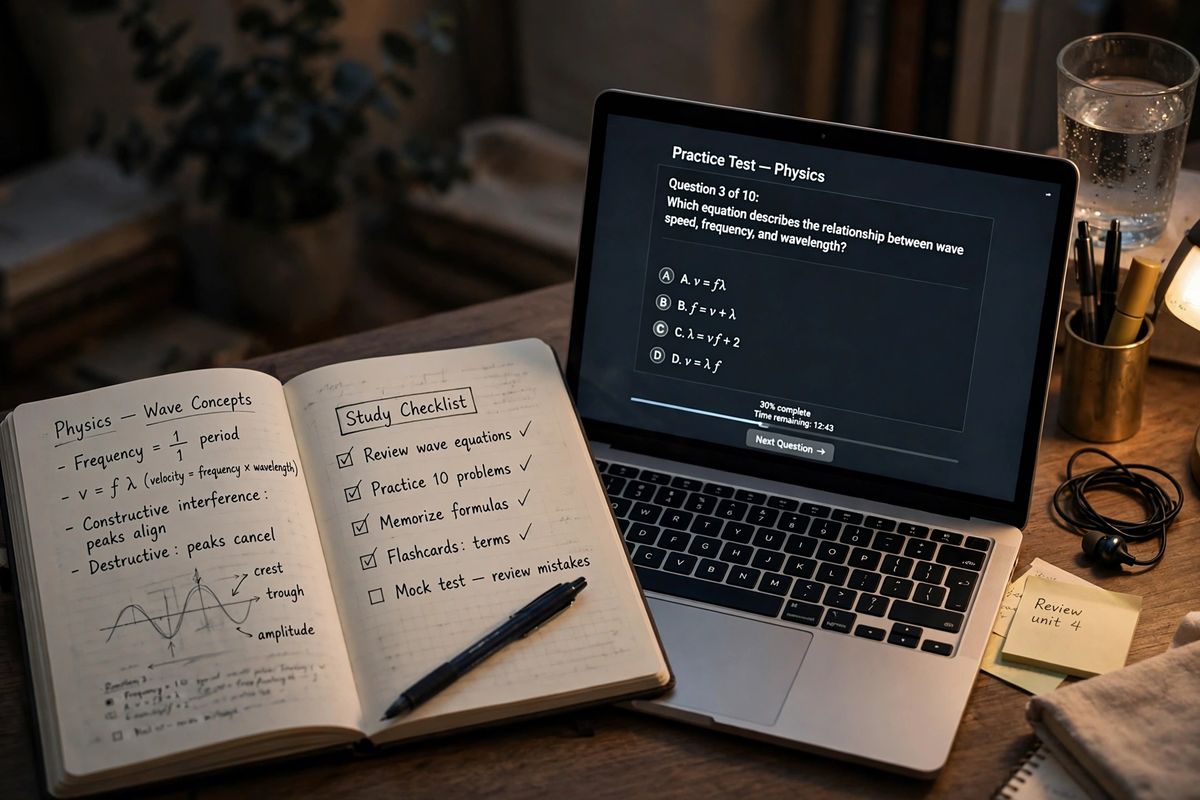
This plan assumes you are also preparing Quant and Verbal Ability. It asks for about 45–60 minutes of Logical Reasoning a day, six days a week, with the time rising as the exam approaches and the focus shifting from learning methods to timed performance.
| Weeks | Focus | Daily work |
|---|---|---|
| 1–2 | Diagrams and basic families | Learn the five diagram shapes; 10 blood relation and 10 syllogism questions a day, untimed |
| 3–4 | Seating arrangement | One seating puzzle a day with the four-step method; 10 series and coding questions |
| 5–6 | Mixed puzzles | Two mixed puzzle sets a day; start timing each set; build your error log |
| 7–8 | Timed section practice | One 40-minute Logical Reasoning section every other day; review every mistake the same day |
| 9–10 | Full mocks and weak-family repair | Two full Rohtak-style mocks a week; one full day on your weakest family |
| 11–12 | Revision and exam-day routine | Revisit your error log and diagram sheet; short timed sets only; no new question types |
The error log is the most important part of this plan. After every timed set, write down each question you got wrong, which family it belonged to, and what went wrong — wrong diagram, missed condition, rushed guess, or time pressure. After three weeks, your error log will show you a pattern you cannot see question by question: most students discover that one family, or one mistake type, accounts for half their lost marks. Fix that one thing and your score jumps more than any amount of extra practice would.
How to Attempt Logical Reasoning on Exam Day

- Start with the speed families. Series, coding, analogies, and single blood relation questions are quick marks. Answer them first and bank the confidence and the marks before touching a puzzle set.
- Take puzzle sets in order of certainty. Attempt the seating or data puzzle whose clues look most definite first. A puzzle that solves cleanly gives you four or five marks at once; a puzzle that branches is a time sink.
- Use two passes. In the first pass, answer everything you can solve in under 90 seconds and mark the rest. In the second pass, return to the marked questions with the time that remains. Never let one question eat four minutes.
- Apply the accuracy rule. With +4 and −1 marking, a random guess among four options has a negative expected value. Guess only when you have eliminated at least two options and have a genuine reason to prefer one of the rest.
- Protect the 40-minute budget. Rohtak's shared clock will not warn you. Decide your Logical Reasoning budget before the exam, check the clock when you enter the section, and move on when the budget ends — even if a puzzle feels nearly solved.
Five Mistakes That Cost Marks in Logical Reasoning
- Solving in your head instead of on paper. The single most common cause of lost marks. If it is not drawn, it is not solved.
- Assuming a gender, a position, or a relationship the question never stated. Logical Reasoning punishes assumptions more than any other section.
- Treating "possible" as "true" in syllogisms. Only conclusions that must be true in every drawing count.
- Spending five minutes on one series question. Speed families are worth 4 marks each, exactly like every other question. Cap them at 60 seconds.
- Practising only untimed. Untimed practice teaches methods; only timed practice teaches exam performance. You need both, in that order.
Frequently Asked Questions
Does IPMAT Indore have a Logical Reasoning section?
No. IPMAT Indore tests Quantitative Ability and Verbal Ability only. Logical Reasoning is a Rohtak section, and it is also tested in JIPMAT, the joint test for IIM Bodh Gaya and IIM Jammu, in a combined Data Interpretation and Logical Reasoning section. If you are preparing for Indore alone, you do not need this section; if you are preparing for Rohtak, it is one-third of your paper.
How many Logical Reasoning questions should I attempt?
There is no fixed safe number, because it depends on your accuracy. A student with 85% accuracy can attempt 35 questions and score well; a student with 60% accuracy attempting 35 questions will lose heavily to negative marking. Track your own accuracy in timed sections, then set your attempt target from that data, not from someone else's number. A good first target for most students is 28–32 attempts with 80% or better accuracy.
Is Logical Reasoning harder than Quant in IPMAT Rohtak?
For most students, no — it is more scoring. Quant tests years of mathematics; Logical Reasoning tests methods you can learn in weeks. Students who start Logical Reasoning late often find it is the section where their score rises fastest, precisely because it was their least prepared section. That is also why leaving it to the last month is a mistake: the rise takes weeks of diagram practice, not days.
Should I prepare differently for Rohtak and JIPMAT Logical Reasoning?
The question families overlap heavily, so your preparation is largely the same. JIPMAT combines Logical Reasoning with Data Interpretation and gives the combined section 33–34 questions in a 150-minute paper, while Rohtak gives Logical Reasoning 40 questions in a 120-minute paper. Practise Rohtak-style with a self-imposed 40-minute budget, and add data interpretation sets if you are also writing JIPMAT.
Do I need coaching for IPMAT Logical Reasoning?
Not necessarily. A disciplined student with good puzzle material, timed sectional tests, and an error log can prepare well alone. Coaching helps most where it gives structure: a fixed schedule, regular mocks, and someone checking your diagrams and error log. If you join a programme, judge it by those three things, not by the number of hours it advertises.
Conclusion
IPMAT 2027 Logical Reasoning preparation rewards the student who draws before solving, learns one method per question family, and practises under a strict time budget. Start with the diagram shapes, master seating arrangement and syllogisms, cap your speed-family questions at 60 seconds, and let your error log tell you which family to fix next. Six months of that routine, done honestly, can turn Rohtak's one-third of the paper into your most reliable third. For the rest of the paper, Skylor's IPMAT 2027 preparation strategy, IPMAT Quantitative Aptitude guide, and IPMAT Verbal Ability guide cover Quant and Verbal Ability, and our guide on how to analyse mock tests shows how to turn every mock into marks. To prepare with regular mocks and mentorship in Bathinda, explore the courses at Skylor Institute and start your Logical Reasoning diagrams this week — for Rohtak aspirants, this section is too large to leave to chance.
Need Personalized Diagnostic Guidance?
Speak directly with Skylor's academic directors in Bathinda. Discuss batch schedules, test analytics, and personalized preparation strategies.